

Key takeaways
- Check from the ground with binoculars or your phone's zoom. Do not climb onto the roof.
- Dented vents, flashing, gutters and screens show that hail reached the house.
- Dark bare spots on shingles and bruises are the main signs on the roof surface.
- A few granules in a downspout are normal. A new pile after a storm is worth noting.
- Have a roofer inspect before you decide anything about repairs or a claim.
Check from the ground first
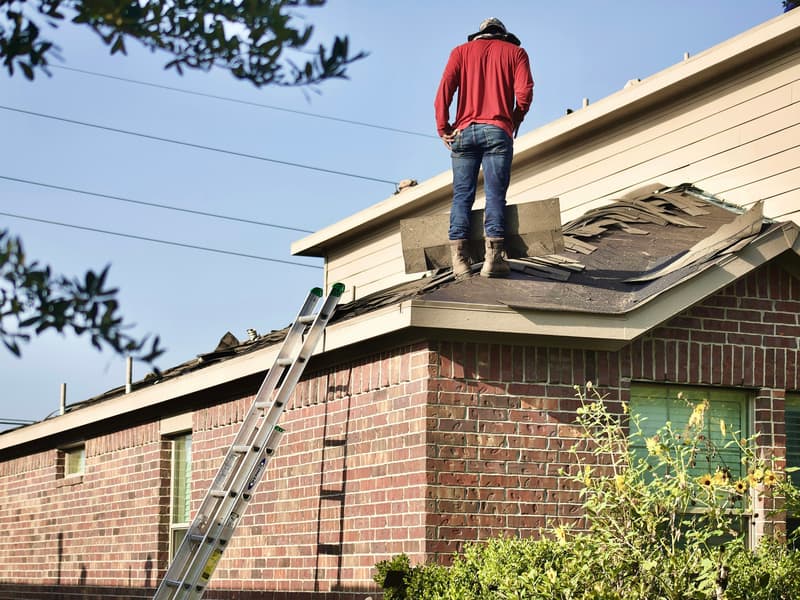
Do not climb onto the roof to look for hail damage. Wet or granule-covered shingles are slippery, and a roof that has just been hit may have weak spots you cannot see. You can start everything in this guide from the ground, with binoculars or the zoom on your phone.
Walk all the way around the house in daylight, after the roof has dried if you can. Look at each slope from a few angles. Low sun across the roof shows dents, dark patches and uneven surfaces that flat midday light hides. Take photos as you go, whether or not you see anything.
Hail does not hit evenly. Wind pushes it at an angle, so slopes facing the direction the storm came from usually take the worst of it, while the opposite side may look almost untouched. Check every side anyway.
Soft metal and other surfaces are often the clearest clue, because they show hits better than shingles do.
Signs on the shingles
On asphalt shingles, hail damage tends to look like this:
- Dark, roundish spots where granules have been knocked off and the black mat underneath shows
- Bruises, which a roofer finds by pressing gently and feeling a soft spot
- Cracks or small fractures in the shingle, usually from larger stones
- Random placement across the slope, with no pattern
From the ground you will mostly see the first one. Confirming a bruise means pressing on the shingle, and that is a job for a roofer working safely on the roof.
Wind damage looks different. Look for missing shingles, lifted tabs, shingles creased across the middle, exposed nails, and bare strips along the eaves, ridge and rakes. A shingle that looks flat but has a horizontal crease has been bent back by wind and may fail in the next storm.
Age can leave marks that look similar. Blistering, curling, cracking across the whole roof, and widespread granule loss are common on older roofs and are not always from hail. Hail marks are scattered and random and usually come with damage elsewhere on the property. Age wear is more even across the roof. A roofer can usually tell the two apart.
Signs on vents, flashing, gutters and other soft metal
Soft metals dent when hail hits them, and a dent is hard to argue with. Check these:
- Roof vents and pipe flashings, which often show dents or cracked plastic
- Ridge caps and metal flashing at chimneys and walls
- Gutters and downspouts, especially at corners and along the front edge
- Window screens, garage doors, and the fins on an outdoor air-conditioning unit
- Mailboxes, grill covers, painted railings, and wood fences and decks
Hail can also leave spatter marks, clean bright spots where it knocked dirt or oxidation off a surface. These fade within a few weeks of weather, so photograph them soon after the storm.
Dents in gutters and vents tell you hail of some size reached your house. They do not by themselves prove the shingles are damaged, and shingles can be damaged without dented gutters, because the materials react differently. Treat dents as a reason to get the roof looked at and as supporting evidence if you later file a claim. If the gutters themselves are dented or pulling away, see gutters.
Granules in downspouts and gutters
Asphalt shingles are coated with small mineral granules that shield the shingle from sun. Every shingle sheds some granules over its life, and new shingles shed extra in their first months. A few granules at the bottom of a downspout is not alarming on its own.
What matters is how many and when. After a hailstorm, a noticeable pile of granules at the downspout outlet, in the splash area below it, or in the gutters that was not there before can mean hail knocked them loose. Dark bare spots on the shingles to match is stronger evidence than the granules alone. Granules that keep collecting on an older roof with no recent storm are more likely a sign of age.
Why it matters: without its granules, the asphalt is exposed to sun and water and wears faster, even if nothing leaks yet. Damage that looks cosmetic can still shorten the life of the roof.
When to have a roofer inspect
Call a roofer if you see dented soft metal, bare spots, missing or creased shingles, a new pile of granules after a storm, or any water stain inside. A roofer will get on the roof safely, look at each slope, check the vents, flashing and ridge, and photograph what they find. Ask for the photos and a written description of what was found and where.
Do not wait long. Small openings let water in, and policy deadlines for reporting storm damage can be short. Check your policy for the time limit. How roof insurance claims usually work walks through the process.
If the inspection finds real damage, storm damage repair is the usual next step, and where it is widespread, roof replacement may be the better answer. If it finds none, you still have a record of the roof's condition after that storm, which is useful to keep.
Frequently asked questions
Can I tell if I have hail damage just by looking from the yard?
Sometimes you can see dents in vents and gutters or bare spots on shingles. Bruises and small cracks are hard to confirm from the ground, so a roofer's inspection is the reliable way to know.
Does a dented gutter mean my roof is damaged?
It means hail reached your house, but it does not prove the shingles are damaged. It is a good reason to have the roof inspected and a useful photo to keep.
How soon after a storm should I check for damage?
As soon as it is safe, ideally within a few days. Spatter marks fade, debris gets cleaned up, and policy time limits may be short.
4 min read.